
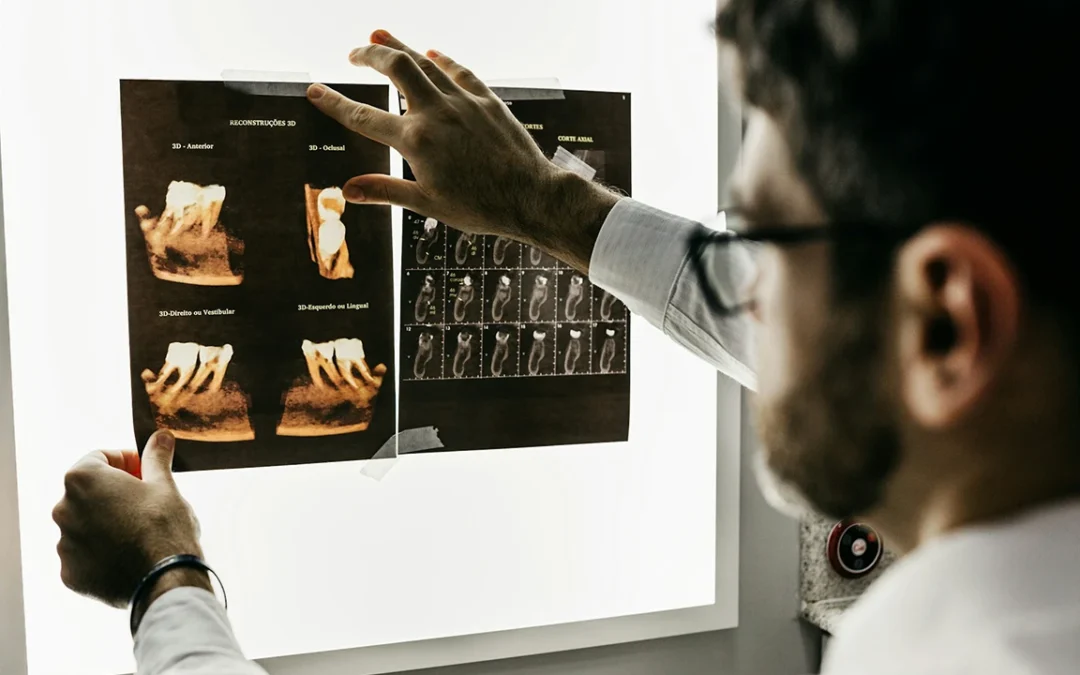
The dental chair reclines, the lead apron settles across your chest, and you hear those familiar words: “We need to take a few x-rays today.”
If you’ve ever felt a twinge of concern in that moment, you’re not alone.
Questions about radiation exposure from dental x-rays rank among the most common concerns patients share with their dentists. Are dental x-rays safe? The short answer is yes—modern dental x-rays expose you to minimal radiation levels that pose virtually no risk to your health when used appropriately. The longer answer involves understanding exactly how much radiation we’re talking about, how it compares to everyday exposure, and why these images remain an essential tool for maintaining your oral health.
Understanding Radiation Exposure in Context
We encounter radiation every single day, whether we realize it or not.
Cosmic rays from space, naturally occurring radon gas in our homes, and radioactive elements in soil and rocks all contribute to what scientists call “background radiation.” The average American receives about 3 millisieverts (mSv) of radiation annually from these natural sources alone—a figure that climbs higher at elevated altitudes or in certain geographic regions.
Here’s where dental x-rays fit into that picture:
- Single bitewing x-ray: 0.005 mSv (equivalent to one day of natural background radiation)
- Full mouth series: 0.15 mSv (less than a cross-country flight)
- Panoramic x-ray: 0.01 mSv (about two days of background radiation)
- Annual background radiation: 3 mSv (just from living on Earth)
Consider flying for a moment. When you board an airplane and ascend to cruising altitude, cosmic radiation exposure increases significantly because there’s less atmosphere to shield you from space radiation. A typical coast-to-coast flight exposes passengers to roughly 0.035 mSv. You’d need seven bitewing x-rays to match the radiation from that single trip.
Yet most travelers never think twice about the health implications of flying.
The comparison extends beyond air travel. Sleeping next to another person for a year exposes you to approximately 0.05 mSv from the potassium-40 naturally present in their body. Eating a banana—rich in the same radioactive isotope—delivers a tiny but measurable dose of radiation. These everyday exposures help illustrate an important point: are dental x-rays safe? They’re safer than many routine activities we perform without concern.
How Modern Technology Reduced Radiation Exposure
Dental imaging has evolved dramatically over the past few decades.
Digital x-ray sensors, now standard in most modern practices, require up to 80% less radiation than traditional film x-rays to produce a clear image. The technology achieves this through enhanced sensitivity—digital sensors can create diagnostic-quality images from far fewer photons than their film predecessors needed. Images appear instantly on a computer screen, eliminating the need for chemical processing and allowing dentists to enhance, magnify, or adjust contrast for better visualization.
The immediate feedback also means fewer retakes due to positioning errors, further minimizing your overall exposure.
Rectangular collimation represents another significant safety advancement. Older x-ray machines used circular beams that exposed a larger area than necessary. Modern equipment features rectangular collimators that shape the beam to match the size of the sensor precisely, reducing scattered radiation by up to 60%. This focused approach ensures radiation reaches only the area being imaged, protecting surrounding tissues unnecessarily. Combined with improved sensor technology and faster film speeds when film is still used, these innovations have made dental x-rays exponentially safer than they were a generation ago.
Protective Measures During Dental X-Rays
Walk into any dental office for x-rays and you’ll immediately encounter three key safety protocols:
1. The Lead Apron
This protective garment contains lead or lead-equivalent material that blocks x-ray photons from reaching your body, particularly shielding reproductive organs and the thyroid gland. The apron typically reduces exposure to areas beneath it by more than 95%, though it’s worth noting that modern dental x-ray techniques already direct the beam so precisely that scatter radiation to the body remains minimal even without protection.
2. The Thyroid Collar
This wraparound shield protects the thyroid gland, located in your neck, from direct or scattered radiation. Since the thyroid is particularly sensitive to radiation and sits relatively close to where dental x-rays are taken, this extra protection makes sense, especially for children and pregnant women.
Some modern protocols debate the necessity of thyroid collars given how low radiation doses have become, but many practitioners continue using them as an added precaution.
3. Individualized Frequency Guidelines
Your dentist’s approach to frequency and necessity provides another crucial layer of protection. The American Dental Association establishes guidelines recommending x-ray intervals based on your individual risk factors, dental history, and current oral health status. A healthy adult with no history of cavities might only need bitewing x-rays every two to three years, while someone with active dental disease may require more frequent imaging to monitor treatment progress.
Professional judgment plays an essential role here. Are dental x-rays safe when taken too frequently? While even excessive dental x-rays rarely cause measurable harm due to their low radiation levels, responsible practitioners balance the diagnostic benefits against cumulative exposure, ordering imaging only when it will genuinely influence treatment decisions.
What X-Rays Reveal That Visual Examination Cannot
The human eye cannot see through solid tooth enamel.
This fundamental limitation means your dentist would miss the vast majority of cavities developing between teeth without x-ray imaging. These interproximal areas—where adjacent teeth touch—create perfect environments for decay to flourish undetected. By the time these cavities become visible during a visual examination, they’ve typically grown large enough to cause symptoms and require more extensive treatment.
Bone loss around teeth tells a similar story. Periodontal disease silently destroys the bone supporting your teeth, often causing no discomfort until significant damage has occurred. X-rays reveal bone levels and loss patterns that guide both diagnosis and treatment planning.
Without this information, dentists might miss disease progression until teeth become loose—a stage that’s far more difficult and expensive to address.
The diagnostic capabilities extend far beyond cavities and bone loss. X-rays detect infections at tooth roots, impacted wisdom teeth, jaw abnormalities, cysts, and tumors. A root canal treatment requires x-rays both to determine if the procedure is necessary and to verify that all infected material has been removed and the tooth properly sealed. Implant placement relies on imaging to assess bone quantity and quality, identify nerve locations, and plan precise positioning.
The question “are dental x-rays safe” must be weighed against these diagnostic capabilities. The small radiation exposure from dental imaging enables early detection and intervention that prevents far more serious health problems. An untreated tooth infection can spread to surrounding tissues and become life-threatening. Undetected bone loss can lead to tooth loss that impacts nutrition, speech, and quality of life.
These real health consequences far outweigh the theoretical risks from properly used dental x-rays.
Special Considerations for Pregnancy and Children
During Pregnancy
Pregnancy naturally heightens awareness about any potential exposure that might affect a developing baby.
The good news: properly performed dental x-rays pose virtually no risk to a fetus. The radiation dose remains so low, and modern beam collimation so precise, that essentially zero radiation reaches the abdomen when imaging focuses on the mouth. The lead apron provides additional assurance, though the American College of Obstetricians and Gynecologists states that diagnostic dental x-rays during pregnancy are considered safe.
That said, many dentists prefer delaying routine x-rays until after delivery simply to eliminate any patient anxiety, even when the objective risk is negligible. Emergency or diagnostic x-rays needed to address acute problems should proceed regardless of pregnancy status—the health consequences of untreated dental infections during pregnancy far exceed any theoretical risk from imaging.
For Children
Children require thoughtful consideration because they’re more sensitive to radiation than adults and have more years ahead during which any effects might theoretically appear.
However, pediatric dental practices account for this increased sensitivity by adjusting exposure settings and using the smallest possible sensor sizes. The frequency of x-rays in children depends entirely on their cavity risk. A child with a history of decay may need annual or even more frequent imaging, while a low-risk child might go two to three years between sets of x-rays.
The consequences of avoiding x-rays in children can be severe. Cavities in primary teeth progress rapidly and can affect the developing permanent teeth beneath them. Identifying and treating these problems early prevents pain, infection, and complications that affect both immediate comfort and long-term dental development.
Comparing Dental X-Rays to Medical Imaging
Medical imaging provides useful perspective on dental x-ray radiation levels. Here’s how common procedures stack up:
- Dental bitewing x-ray: 0.005 mSv
- Chest x-ray: 0.1 mSv (20 times a dental x-ray)
- Mammogram: 0.4 mSv (80 times a dental x-ray)
- CT scan of the chest: 7 mSv (1,400 times a dental x-ray)
- Full mouth dental series: 0.15 mSv (30 times a dental bitewing)
These comparisons aren’t meant to minimize concerns about medical imaging, which remains safe and essential when clinically indicated. Rather, they illustrate just how minimal dental x-ray exposure truly is.
If you’ve had a CT scan for any reason—to evaluate injuries, diagnose internal problems, or screen for disease—you’ve received far more radiation than you would from years of routine dental x-rays. The risk-benefit calculation consistently favors appropriate imaging. Untreated dental disease leads to measurable health problems: infections, tooth loss, difficulty eating, nutritional deficiencies, and systemic inflammation that may contribute to other health conditions.
The small radiation exposure from diagnostic imaging enables prevention and early treatment that avoids these concrete health consequences.
Making Informed Decisions About Your Dental Care
Understanding radiation exposure from dental x-rays empowers you to make informed decisions about your oral health care.
When your dentist recommends x-rays, you’re entitled to ask questions:
- Why are these x-rays needed?
- What information will they provide?
- How will this information influence my treatment?
Most practitioners welcome these conversations and appreciate patients who take an active interest in their care. You also have the right to ask about your dental office’s imaging technology. Does the practice use digital sensors? Does the equipment have rectangular collimation? How are exposure settings adjusted for children or patients with special needs?
Modern practices should readily provide this information and discuss the precautions they take to minimize radiation exposure.
Are dental x-rays safe? The evidence overwhelmingly supports their safety when used appropriately. The radiation exposure remains far below levels associated with any measurable health risk, comparable to or less than everyday environmental exposure we accept without concern.
Meanwhile, the diagnostic information x-rays provide is irreplaceable—enabling early detection, accurate diagnosis, and effective treatment that preserves your oral health and prevents serious complications.
Expert Dental Care in Tulsa
At Tulsa Dental Center, Dr. Joanna Roulston combines state-of-the-art digital x-ray technology with thoughtful, individualized care protocols.
Our modern imaging equipment minimizes radiation exposure while providing the detailed diagnostic information needed to maintain your oral health effectively. We take x-rays only when clinically necessary, adjusting frequency based on your unique dental history and current condition. Whether you’re due for a routine checkup or facing a specific dental concern, our team prioritizes both your safety and comfort throughout every visit.
We’re happy to discuss any questions about imaging procedures, radiation exposure, or any aspect of your dental care.
Schedule your appointment at Tulsa Dental Center today by calling (918) 446-6100 or visiting us at 4824 S Union Ave in Tulsa. Experience modern dentistry that puts your health and peace of mind first.
Recent Comments