
Your partner nudges you awake, complaining about the grinding sounds coming from your side of the bed. Or maybe you wake up with an aching jaw and a dull headache that wasn’t there when you fell asleep. Nighttime teeth grinding—clinically known as bruxism—affects millions of adults and can cause serious dental damage if left untreated.
The challenge with learning how to stop grinding teeth is that it happens while you’re unconscious. You can’t simply tell yourself to stop. The forces generated during grinding can exceed normal chewing pressure by several times, wearing down enamel, fracturing teeth, and straining jaw muscles.
Signs You’re Grinding Your Teeth
Many people grind for months before realizing they have a problem:
- Morning jaw soreness or stiffness that improves throughout the day
- Unexplained tooth damage like chips, fractures, or flattened surfaces
- Increased tooth sensitivity, especially to cold
- Dull headaches that start at the temples
- Tight or locked jaw muscles when you wake
- Unusual wear patterns noticed during dental exams
The Stress Connection
Stress and anxiety drive most cases of sleep bruxism. Work deadlines, relationship troubles, financial worries, or major life changes often coincide with increased grinding. Your unconscious mind continues wrestling with these stressors while you sleep, translating mental pressure into physical jaw activity.
Understanding how to stop grinding teeth starts with managing the stress that fuels it. Daily exercise provides a physical outlet for tension—walking, swimming, or yoga reduce stress hormones while promoting deeper sleep. Create a pre-sleep wind-down routine with reading, gentle stretching, meditation, or calming music. Dedicating 30-60 minutes to this transition significantly reduces grinding episodes.
Journaling or scheduled worry time earlier in the day helps interrupt anxious thought patterns that increase muscle tension at bedtime.
Night Guards Protect Your Teeth
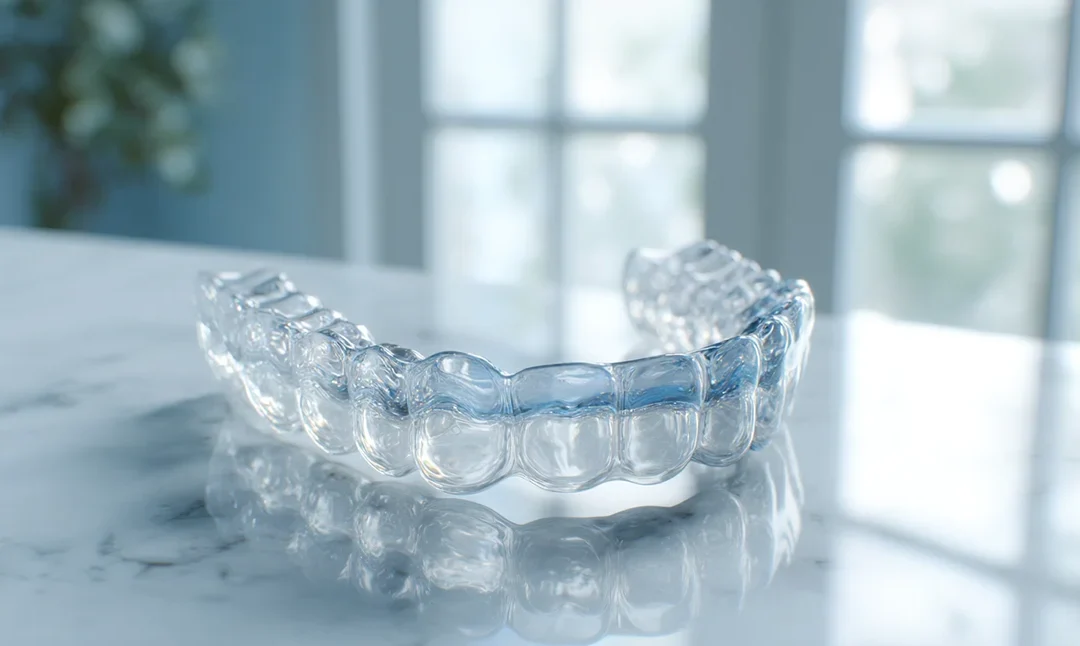
A custom night guard creates a protective barrier between your upper and lower teeth, absorbing grinding forces that would otherwise damage your enamel.
Custom night guards from your dentist outperform drugstore versions significantly. Your dentist takes precise impressions to create an appliance that fits your mouth exactly, staying in place throughout the night and distributing pressure evenly.
Types of night guards:
- Soft guards work for mild to moderate grinding and feel most comfortable initially
- Hard acrylic guards provide maximum protection for severe grinders
- Dual-laminate guards combine a hard exterior with a softer interior layer
Care for your guard by rinsing with cool water after each use and brushing gently with mild soap. Never use hot water—it warps the material. Store it in its case and let it air dry completely.
Lifestyle Changes That Help
Caffeine and alcohol: Caffeine stays active in your system for 6-8 hours. Cut off intake by early afternoon. Alcohol disrupts sleep architecture and can increase muscle activity during certain sleep stages, worsening grinding.
Sleep position: Back sleeping reduces grinding compared to stomach or side sleeping. Your jaw hangs in a naturally relaxed position with less pressure on the temporomandibular joint. Body pillows help maintain this position.
Pillow height matters: Too high pushes your head forward, creating jaw tension. Too flat fails to support your neck. Memory foam or cervical support pillows work well for maintaining neutral alignment.
Medications: Antidepressants (especially SSRIs), ADHD medications, and some allergy medications can trigger grinding. If you started or changed medications when your grinding began, discuss alternatives with your physician.
Simple Jaw Exercises
Place your tongue on the roof of your mouth just behind your front teeth. Let your jaw relax with teeth slightly apart—not touching. This is your jaw’s natural resting position. Practice this throughout your waking hours to reinforce muscle memory.
Massage your masseter muscles (the large muscles on each side of your jaw) by placing your fingers on your cheeks just in front of your ears and pressing gently while moving in small circles. Spend 2-3 minutes on each side, especially right before bed.
The Sleep Apnea Connection
Sleep apnea and teeth grinding frequently occur together. If you snore loudly, experience breathing pauses during sleep, or wake frequently feeling unrested, get evaluated for sleep apnea.
CPAP therapy often reduces or eliminates grinding. Many patients report significant improvement once treatment begins, suggesting their grinding was linked to airway obstruction.
When to See Your Dentist
Self-management strategies don’t always suffice. Seek professional care if you notice:
- Visible tooth damage like chips, fractures, or noticeably shorter teeth
- Persistent jaw pain interfering with eating, speaking, or daily activities
- Bite alignment changes where your teeth don’t fit together like they used to
A comprehensive bruxism and teeth grinding evaluation examines your teeth for wear patterns, assesses jaw joint function, and determines which treatments will work best for your situation.
Advanced Treatment Options
For severe cases, additional treatments address the grinding behavior itself:
Botox injections partially paralyze the masseter muscles, reducing grinding force. Effects last 3-6 months. Many patients report dramatic improvement in both frequency and associated pain.
Biofeedback devices detect jaw muscle activity and provide gentle feedback when grinding begins. Over time, you learn to respond by relaxing your jaw, even while sleeping.
Stress counseling or therapy helps you develop better coping mechanisms, reducing the unconscious tension that manifests as grinding.
Building Long-Term Habits
Track your patterns in a simple journal—stress levels, dietary habits, alcohol consumption, and whether you wake with jaw pain. Over several weeks, patterns emerge that identify your specific triggers.
Maintain your night guard consistently, even when grinding seems to improve. Many people experience cycles where intensity varies, but these improvements often prove temporary.
Continue stress management practices even after symptoms improve. The underlying tendency to respond to stress with jaw tension remains present.
Protect Your Smile at Tulsa Dental Center
If nighttime teeth grinding is damaging your teeth or causing jaw pain, the team at Tulsa Dental Center can help. Dr. Joanna K Roulston specializes in diagnosing and treating bruxism with solutions tailored to your specific needs, from custom night guards to comprehensive treatment plans.
Don’t wait until significant tooth damage occurs. Early intervention protects your teeth and prevents painful complications.
Contact Tulsa Dental Center at (918) 446-6100 to schedule a bruxism evaluation. Visit us at 4824 S Union Ave, Tulsa, OK 74107, or email info@tulsadentalcenter.com.
Recent Comments