
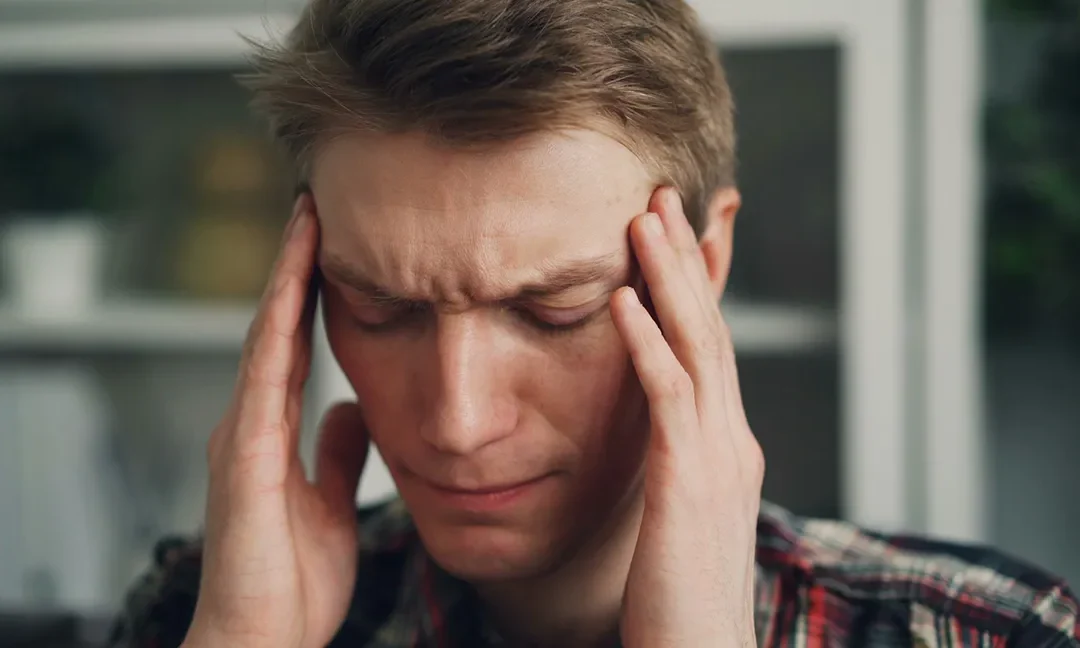
You wake up with a pounding headache and an aching tooth, and you’re not sure which one to deal with first — or whether they’re even related. The answer, more often than not, is yes: a toothache can absolutely cause a headache. The two are connected in ways that aren’t immediately obvious, and understanding that connection can help you get to the right treatment faster.
Why Tooth Pain and Head Pain Travel Together
The key is a nerve called the trigeminal nerve — the largest cranial nerve in the body, responsible for sensation across most of the face, including the teeth, gums, jaw, and forehead. When a tooth becomes infected, inflamed, or severely decayed, the pain signal travels along this nerve network. Because the trigeminal nerve branches so extensively, pain originating in a single tooth can radiate outward in ways that feel like a headache, a sinus ache, or even ear pain.
This is called referred pain — a well-documented phenomenon where the brain misidentifies the source of a signal traveling along a shared nerve pathway. It’s the same reason a heart attack can cause arm pain, or why a pinched nerve in the neck can cause tingling in the fingers. The brain receives a pain signal and doesn’t always trace it back to the correct origin.
Referred pain from a tooth is particularly common with the upper back molars, which sit close to the maxillary sinuses. When those teeth are infected or abscessed, the resulting pain can mimic a sinus headache almost perfectly — including pressure around the eyes and forehead.
Which Dental Problems Are Most Likely to Cause Headaches?
Not every toothache travels far enough to become a headache, but several dental conditions are known to trigger head pain with some regularity.
Tooth abscess. An abscess is a pocket of infection at the root of a tooth or in the surrounding gum tissue. The pressure and inflammation involved can be intense, and the pain frequently radiates upward through the jaw into the temples or behind the eyes. Abscesses don’t resolve on their own — they require prompt dental treatment, and in some cases, the infection can spread to surrounding tissue if left untreated.
Impacted wisdom teeth. When a wisdom tooth is partially or fully impacted, the pressure it creates doesn’t stay localized. It radiates through the jaw and can trigger persistent headaches, particularly at the temples or the back of the head near the base of the skull.
Bruxism (teeth grinding). This one is worth its own category. People who grind or clench their teeth — often during sleep — put enormous sustained pressure on the teeth, jaw joints, and surrounding muscles. The tension that builds in the masseter and temporalis muscles (the primary muscles of chewing) directly contributes to tension-type headaches, and in many cases, bruxism is an overlooked cause of chronic morning headaches.
Temporomandibular joint (TMJ) dysfunction. The TMJ connects the jawbone to the skull on either side of the head, just in front of the ears. When this joint becomes inflamed or misaligned — often due to grinding, bite issues, or stress-related clenching — it can produce a persistent ache that radiates through the temples, behind the eyes, and even down into the neck.
Dental infections and untreated cavities. A cavity that hasn’t been treated will eventually reach the inner pulp of the tooth, where the nerve lives. Once that nerve is involved, the pain becomes significantly more intense and is far more likely to radiate. Patients who describe a toothache that seems to come in waves and is accompanied by a dull headache are often dealing with pulpitis — inflammation of the dental pulp — that has progressed to this stage.
How to Tell If Your Headache Is Tooth-Related
This is trickier than it sounds, because referred pain is designed — by its very nature — to feel like it’s coming from somewhere other than its actual source. A few patterns, though, are worth paying attention to.
Headaches that are consistently worse on one side — particularly the same side as a tooth that’s been bothering you — are a meaningful signal. Pain that worsens when you bite down, touch a specific tooth, or eat something cold or hot points clearly toward a dental origin. Morning headaches that occur alongside jaw soreness or tooth sensitivity are strong indicators of nighttime grinding.
If your headache responds to dental pain relievers like ibuprofen but keeps coming back, and especially if it’s accompanied by any visible swelling in the jaw or gums, a dental evaluation is the right next step — not another round of over-the-counter pain management.
What Won’t Help: Waiting It Out
Tooth-related headaches don’t resolve until the underlying dental problem is addressed. Taking ibuprofen every six hours will manage the symptoms temporarily, but an abscess continues to grow, a cavity continues to deepen, and an impacted tooth continues to press. The pain relief is masking a problem that is, in most cases, getting worse in the background.
There’s also a more serious consideration with dental infections specifically. An untreated abscess can spread to the jaw, neck, or — in rare but documented cases — to deeper structures. The headache is your body signaling that something is wrong. It’s worth listening to.
The Flip Side: Can a Headache Cause Tooth Pain?
It goes the other direction too. Migraine headaches, in particular, are sometimes accompanied by tooth pain or jaw aching — again due to the trigeminal nerve’s involvement in migraine physiology. Some migraine sufferers have undergone unnecessary dental procedures searching for a tooth-based source of pain that was actually neurological in origin.
This underscores why a proper evaluation matters. A dentist can examine the teeth, take X-rays, and determine whether there’s a genuine dental source for the pain — or whether the symptoms point somewhere else. That kind of clarity is hard to get from a Google search or a pain reliever.
Get to the Root of It at Tulsa Dental Center
If you’re dealing with tooth pain and headaches that keep showing up together, the team at Tulsa Dental Center can help you figure out what’s actually going on. Dr. Joanna K. Roulston provides thorough evaluations and honest recommendations — no unnecessary procedures, no guesswork.
Call (918) 446-6100 or email appointments@tulsadentalcenter.com to schedule your appointment. We’re at 4824 S Union Ave, Tulsa, OK 74107, and we’re here to help you get out of pain for good.
Recent Comments