
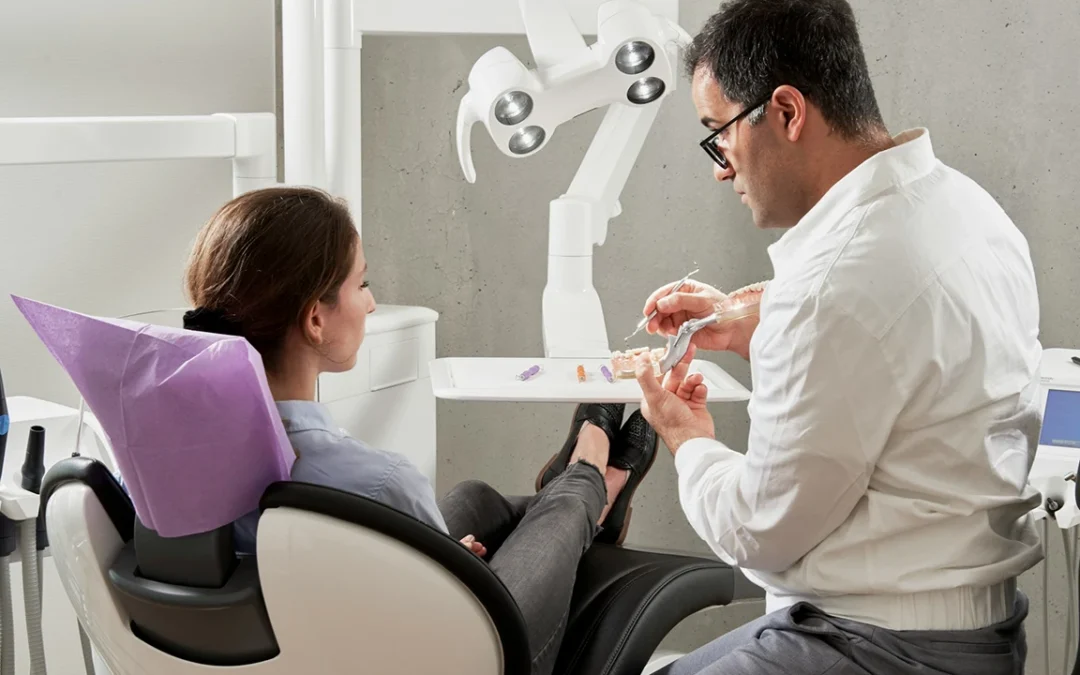
Ask most people what happens at a dental checkup and they’ll say the dentist looks for cavities. That’s part of it, but it’s a small part. A thorough dental exam is a full evaluation of your oral health — teeth, gums, bite, jaw, and the soft tissues of your mouth — and it’s designed to catch problems while they’re still small enough to fix easily.
The distinction matters because the things that go undetected between exams are rarely the things that hurt. Cavities between teeth, early gum disease, bone loss, and oral cancer all develop silently. A checkup is how they get found and it’s a key aspect of preventative dentistry.
Why Are Dental Exams Important?
Dental exams are important because they catch problems early, while treatment is still simple and inexpensive. Nearly every dental problem is cheaper and less invasive to treat when a dentist finds it early rather than after it has progressed.
A cavity found at a routine checkup needs a filling. That same cavity found two years later might need a root canal and a crown, or the tooth might not be savable at all. Gum disease caught in its earliest stage is completely reversible, but left alone, gum disease destroys the bone that holds teeth in place, and that bone loss is permanent.
A dental exam also builds a baseline. When a dentist sees your mouth consistently, changes become visible — a spot that wasn’t there last time, a filling that’s beginning to fail, gum recession that’s progressing. Those comparisons are only possible against a documented history, which is why consistency matters more than any single visit.
What Your Dentist Checks at Every Exam
A dental exam is a full evaluation of the teeth, gums, bite, jaw, and soft tissues of the mouth. During a typical checkup, your dentist and hygienist evaluate:
- Teeth — for decay, cracks, wear, and the condition of existing fillings, crowns, and other restorations
- Gums — measuring pocket depths around each tooth and checking for inflammation, bleeding, and recession
- Bite and jaw — assessing how the teeth come together and screening for signs of grinding or TMJ problems
- Soft tissues — the tongue, cheeks, lips, floor of the mouth, and palate
- Neck and jaw area — feeling for lumps or swelling in the lymph nodes and salivary glands
- Overall oral hygiene — identifying spots where a daily routine could be more effective
That last point is easy to dismiss but useful in practice. A hygienist who notices you’re consistently missing the same area can show you how to adjust, which prevents problems rather than just documenting them.
The Role of Dental X-Rays
Dental X-rays reveal problems a visual exam can’t detect: decay forming between teeth, bone loss around the roots, impacted teeth, abscesses, cysts, and decay developing beneath existing fillings. None of these are visible to the eye during a standard exam.
A cavity forming between two molars is a good example. The cavity stays completely hidden until it’s large enough to cause symptoms, and by that point the treatment has usually escalated. An X-ray catches it while it’s still a small filling.
Patients sometimes ask about radiation exposure, and it’s a fair question. Modern digital X-rays use a very small fraction of the radiation older film systems required, and dentists take them only when clinically warranted rather than automatically at every visit.
Oral Cancer Screening
An oral cancer screening is a quick visual and physical check of the mouth, throat, jaw, and neck for signs of cancer, and it’s part of every routine dental exam. Your dentist examines the soft tissues of the mouth and throat and feels along the jaw and neck, looking for lesions, lumps, discoloration, or texture changes.
Early oral cancer is often painless, which means there’s frequently no symptom to prompt a patient to seek help. The screening is what finds it, and the difference early detection makes is significant — survival rates are high when oral cancer is caught early and drop sharply when it isn’t. A two-minute check at a visit you’re already attending is among the highest-value things a dentist does.
How Long Does a Dental Checkup Take?
A routine checkup and cleaning generally takes 45 minutes to an hour. The exam portion itself is relatively quick — usually 15 to 20 minutes — with the cleaning making up the rest.
A few things extend that. First visits run longer because there’s no existing record, so a full set of X-rays and a comprehensive baseline evaluation are part of the appointment. Visits where a problem turns up take longer as well, since the dentist may investigate further or discuss treatment options. And patients who haven’t been in for a while often need more time, simply because there’s more to assess and more buildup to address.
Why Are Children’s Dental Exams Important?
Children’s dental exams are important because they monitor development, not just decay. A children’s exam tracks how teeth are erupting, whether the bite is forming correctly, and whether early orthodontic issues are surfacing — alongside checking for cavities.
Cavities in baby teeth progress faster than in adult teeth and can affect the permanent teeth developing beneath them, so catching them early prevents complications down the road. Establishing the habit young also shapes how a child feels about dental care for the rest of their life, which is reason enough to prioritize it.
Adults, by comparison, are typically maintaining — watching existing restorations, keeping gum health stable, and catching new problems as they arise.
How Often Should Seniors Have Dental Checkups?
Most seniors should have a dental checkup every six months, and many benefit from more frequent visits. Age raises the risk of gum disease, dry mouth from medications, and oral cancer, and existing dental work may need monitoring or replacement.
The right interval depends on individual health, medication use, and the condition of any existing restorations. A senior in excellent oral health may do fine every six months, while one managing gum disease or multiple medications may need to come in every three to four months.
How Often Should You Get Dental Checkups?
Most people should get a dental checkup every six months, though the ideal frequency depends on individual risk factors. Six months suits patients with healthy teeth and gums, but some patients need to come in more often and a smaller number can safely wait longer.
Patients with a history of gum disease, smokers, and those prone to decay generally need shorter intervals. The right frequency is a clinical judgment based on your specific mouth, not a fixed number that applies to everyone equally.
How Much Are Dental Checkups Without Insurance?
Without insurance, a routine checkup generally runs somewhere between $75 and $200, depending on the practice, the region, and whether X-rays are taken at the visit. First visits and those including a full set of X-rays land toward the higher end.
For patients with dental insurance, preventative exams are typically covered at or near 100%, usually twice a year — insurers cover them fully because catching problems early is far cheaper than treating them late. Medicare is the common exception worth knowing about: original Medicare does not cover routine dental exams, though some Medicare Advantage plans include dental benefits. Patients on Medicare should check their specific plan rather than assume coverage either way.
For uninsured patients, dental savings plans, cash-pay discounts, and payment arrangements all help keep routine care accessible.
Schedule Your Checkup at Tulsa Dental Center
Whether you’re due for a routine visit or it’s been longer than you’d like, the team at Tulsa Dental Center will give you a thorough exam and a clear picture of where your oral health stands.
Call (918) 446-6100, email [email protected], or contact us online. We’re located at 4824 S Union Ave, Tulsa, OK 74107.
Frequently Asked Questions About Dental Exams and Checkups
Why are dental exams important?
Dental exams catch problems early, when they’re easier and cheaper to treat. Cavities, gum disease, and oral cancer all develop without obvious symptoms in their early stages, and a checkup is often the only way they get found before they become serious. Exams also build a health history that lets your dentist spot changes over time.
What are the benefits of dental checkups?
Early detection of decay and gum disease, oral cancer screening, professional removal of tartar that home care can’t touch, and a chance to correct issues with your daily routine before they cause problems. Regular checkups consistently reduce the likelihood of needing major, expensive dental work later.
How long does a dental checkup take?
Most routine checkups with a cleaning take 45 minutes to an hour. First visits run longer because they include a full set of X-rays and a complete baseline evaluation, and appointments where a problem is found may take additional time.
How often should you get dental checkups?
Every six months works for most people, but the right frequency depends on your individual oral health. Patients with a history of gum disease, smokers, and those prone to decay often need to come in more often, while some low-risk patients can safely wait longer.
Does Medicare cover dental exams?
Original Medicare does not cover routine dental exams or cleanings. Some Medicare Advantage plans include dental coverage, so patients on Medicare should verify what their specific plan offers rather than assume.
How much do dental checkups cost without insurance?
A routine checkup typically costs between $75 and $200 without insurance, depending on the practice, the region, and whether X-rays are included. Many practices offer dental savings plans or payment options that reduce the out-of-pocket cost for uninsured patients.
Why are children’s dental exams important?
Beyond catching cavities, children’s exams monitor how teeth and the bite are developing, allowing early intervention when something isn’t tracking correctly. Just as importantly, positive early dental experiences shape how a child approaches oral care for life.
Recent Comments