
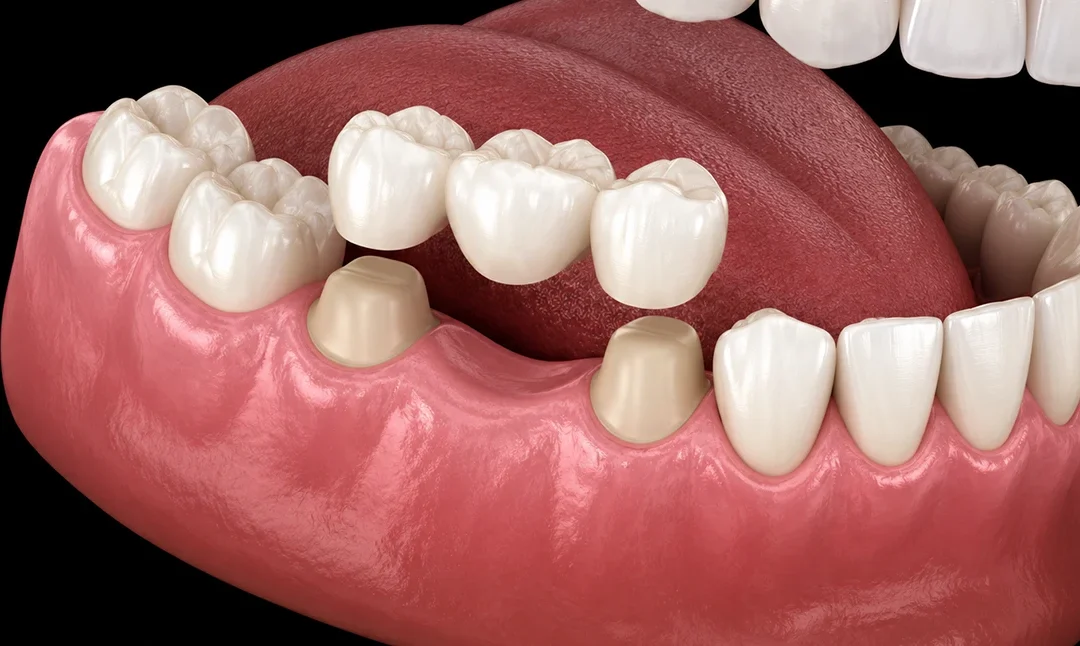
A dental bridge is a fixed restoration that replaces one or more missing teeth. It uses artificial teeth called pontics, held in place by crowns on the neighboring teeth or by dental implants, to fill the gap so you can bite, chew, and speak normally again.
What Is a Dental Bridge?
A dental bridge is a custom restoration that closes the gap left by one or more missing teeth. It spans the empty space with one or more artificial teeth, anchored on either side so the replacement stays fixed in place and functions like the teeth around it.
Bridges are a core option in restorative dentistry, the branch of dental care focused on repairing damaged teeth and replacing missing ones. Left unfilled, a gap lets the neighboring teeth drift out of position and changes how your bite comes together, which is why replacing a missing tooth matters beyond appearance alone.
How Do Dental Bridges Work?
A dental bridge works by anchoring a replacement tooth to a stable support on each side of the gap. The replacement tooth in the middle is called a pontic, and the supports that hold it are called abutments.
Those abutments are usually crowns placed over the natural teeth on either side of the gap, though they can also be dental implants set into the jaw. Once the bridge is cemented onto the abutments, it stays put — you do not take it out to clean it, and it handles biting and chewing the way a natural tooth does.
Is a Dental Bridge the Same as a Crown?
No. A crown caps a single damaged tooth to restore it, while a dental bridge replaces teeth that are already missing by spanning the gap between healthy teeth. The two are related because a traditional bridge often uses crowns as its anchors, which is where the confusion tends to come from.
Which one you need depends on whether the tooth is damaged but still present, or gone entirely. Choosing between a dental bridge and a crown comes down to the condition of that tooth and whether the neighboring teeth are healthy enough to serve as anchors.
What Are the Types of Dental Bridges?
There are four main types of dental bridges, and the right one depends on how many teeth are missing, where the gap sits, and the condition of the surrounding teeth.
Traditional Bridge
The most common type. A pontic is held by a crown on each of the two natural teeth flanking the gap. It is strong and reliable when the teeth on both sides are healthy enough to be crowned.
Cantilever Bridge
Anchored on only one side rather than two. Used when there is a healthy tooth on just one side of the gap. Because all the force lands on a single abutment, it is reserved for areas that take less chewing pressure.
Maryland Bridge
A more conservative option that uses a metal or porcelain framework bonded to the backs of the adjacent teeth instead of crowns. Preserves more natural tooth structure but is less sturdy, making it better suited to front teeth.
Implant-Supported Bridge
Supported by dental implants set into the jaw rather than by natural teeth. Used when several teeth in a row are missing. The most stable option, and it does not require altering the neighboring teeth.
What Are Dental Bridges Made Of?
Dental bridges are made from the same materials used for crowns, chosen to balance strength with a natural appearance. The most common are:
Porcelain Fused to Metal (PFM)
A metal base for strength with a porcelain outer layer for a tooth-like look. A long-standing, versatile choice, though a thin metal line can become visible at the gumline over the years.
All-Ceramic or All-Porcelain
The most natural-looking option, matched to the color and translucency of your teeth. Often chosen for front teeth where appearance matters most.
Zirconia
A very strong ceramic that resists cracking while still looking natural. It performs well on both front and back teeth and has become a popular all-around material.
Metal Alloys
Gold or base-metal alloys are the most durable and gentle on opposing teeth, but their color keeps them to out-of-sight back teeth.
How Are Dental Bridges Fitted?
Getting a dental bridge fitted usually takes at least two visits. From the first consultation to the final fitting, here’s how it’s done:
- 1Consultation and exam. The dentist examines the gap and the surrounding teeth, takes X-rays, and confirms a bridge is the right fit.
- 2Preparing the abutments. The anchor teeth are reshaped to receive crowns. For an implant-supported bridge, the implants are placed and given time to heal first.
- 3Impressions. A digital scan or physical impression captures the exact shape needed so the bridge fits precisely.
- 4Temporary bridge. A temporary bridge is placed to protect the prepared teeth while the permanent one is made in a dental lab.
- 5Fitting the permanent bridge. At the final visit, the bridge is checked for fit and bite, adjusted, and cemented into place.
What Are the Benefits of Dental Bridges?
A bridge does more than fill a visible gap. Its main benefits include:
For many people replacing a missing tooth, a bridge delivers a strong, natural-looking result at a lower upfront cost than implants, which is a large part of why it remains one of the most chosen tooth-replacement options.
Do Dental Bridges Hurt?
Getting a dental bridge should not hurt. The teeth being worked on are numbed with local anesthetic, so you feel pressure rather than pain while the abutments are prepared and the bridge is placed.
Some tenderness or sensitivity in the prepared teeth and gums for a few days afterward is normal and fades on its own. If discomfort lingers or your bite feels off once the permanent bridge is in, a quick adjustment usually resolves it.
How Long Do Dental Bridges Last?
With good care, most dental bridges last between 5 and 15 years, and often longer. Longevity depends heavily on oral hygiene, your bite, and the type of bridge:
| Bridge Type | Typical Lifespan |
|---|---|
| Traditional | 10–15 years |
| Cantilever | 5–10 years |
| Maryland | 5–10 years |
| Implant-supported | 15+ years, often much longer |
Keeping the bridge and the teeth or implants that support it clean is the single biggest factor in how long it lasts. Grinding, chewing ice, and skipped cleanings all shorten its life.
How Much Do Dental Bridges Cost?
The cost of a dental bridge depends on the type, the number of teeth being replaced, and the materials used. These are typical ranges before insurance:
| Bridge Type | Typical Cost (Before Insurance) |
|---|---|
| Traditional (3-unit) | $2,000–$5,000 |
| Cantilever | $2,000–$5,000 |
| Maryland | $1,500–$2,500 |
| Implant-supported | $5,000–$15,000+ |
An implant-supported bridge costs more upfront because it includes the implants themselves. An exam is the only way to pin down the price for your specific situation.
Does Dental Insurance Cover Bridges?
Most dental insurance plans that include major restorative care cover part of the cost of a dental bridge, commonly around 50 percent after your deductible, up to the plan’s annual maximum. Because a bridge is usually classified as major work rather than basic care, the covered percentage tends to be lower than it is for a filling, and the annual maximum can leave a balance on higher-cost bridges. Checking your specific plan before treatment is the best way to know what to expect.
Does Medicare Cover Dental Bridges?
Original Medicare (Parts A and B) does not cover routine dental care, which means a standard dental bridge is generally not covered. Some Medicare Advantage (Part C) plans include dental benefits that may help with part of the cost, so it is worth checking the details of your specific plan.
Does Medicaid Cover Dental Bridges?
Medicaid dental coverage for adults varies from state to state, and where it exists it is often limited to basic and emergency care rather than restorations like dental bridges. Coverage for children is broader. Confirming what your state’s program includes before treatment is the safest approach.
How Do You Care for a Dental Bridge?
A dental bridge lasts longest when the teeth and gums around it stay healthy. To care for one:
Cleaning under the pontic is the step people miss most often, and it is where decay or gum trouble tends to start on the supporting teeth.
Dental Bridges vs. Dental Implants
When you are replacing a missing tooth, a dental bridge and a dental implant are the two options most often weighed against each other. They solve the same problem in different ways:
| Factor | Dental Bridge | Dental Implant |
|---|---|---|
| Procedure | Usually non-surgical | Surgical placement in the jaw |
| Neighboring teeth | Traditional bridge crowns the adjacent teeth | Left untouched |
| Bone preservation | Does not stop bone loss under the gap | Helps preserve jawbone |
| Timeline | A few weeks | Several months |
| Upfront cost | Lower | Higher |
| Lifespan | 5–15 years | 15+ years, often a lifetime |
A bridge wins on speed and upfront cost; an implant wins on longevity and protecting the jawbone. If you are leaning toward the longer-lasting route that leaves the neighboring teeth alone, dental implants are the main alternative to consider.
Ready to Fill That Gap at Tulsa Dental Center?
A missing tooth only causes more trouble the longer it sits — shifting teeth, a changing bite, and bone loss under the gap. If you are missing one or more teeth, our team at Tulsa Dental Center can walk you through whether a bridge is the right fit and what it would involve.
Call (918) 446-6100, email [email protected], or schedule online. We’re located at 4824 S Union Ave, Tulsa, OK 74107.
Frequently Asked Questions About Dental Bridges
What are the best materials for dental bridges?
There is no single best material — the right one depends on where the dental bridge sits. Zirconia and porcelain fused to metal are popular for their strength, all-ceramic is often chosen for front teeth where appearance matters most, and metal alloys are the most durable for out-of-sight back teeth.
Who offers implant-supported dental bridges?
Our team at Tulsa Dental Center offers implant-supported dental bridges along with traditional, cantilever, and Maryland bridges. A consultation is the best way to find out which type suits your situation.
Are dental bridges permanent?
A dental bridge is fixed in place and not something you remove, but it is not permanent in the sense of lasting forever. Most bridges last well over a decade with good care and are then replaced.
Are dental bridges removable?
No. Traditional, cantilever, Maryland, and implant-supported dental bridges are all fixed restorations that are cemented or attached in place. A removable partial denture is the take-out alternative for replacing missing teeth.
Do dental bridges look natural?
Yes. Modern dental bridges are made from tooth-colored materials matched to the shade and translucency of your surrounding teeth, so a well-made bridge blends in and is difficult to spot.
Are dental bridges worth it?
For most people replacing a missing tooth, a bridge is worth it: it restores chewing and speech, keeps the other teeth from shifting, and looks natural, all at a lower upfront cost than implants. Whether it is the best value for you depends on the health of the neighboring teeth and your long-term goals, which a consultation can sort out.
How much do dental bridges cost with insurance?
If your plan covers major restorative work at around 50 percent after the deductible, your out-of-pocket cost is roughly half the price of the dental bridge, up to your plan’s annual maximum. Higher-cost bridges can exceed that maximum, leaving a remaining balance.
Recent Comments